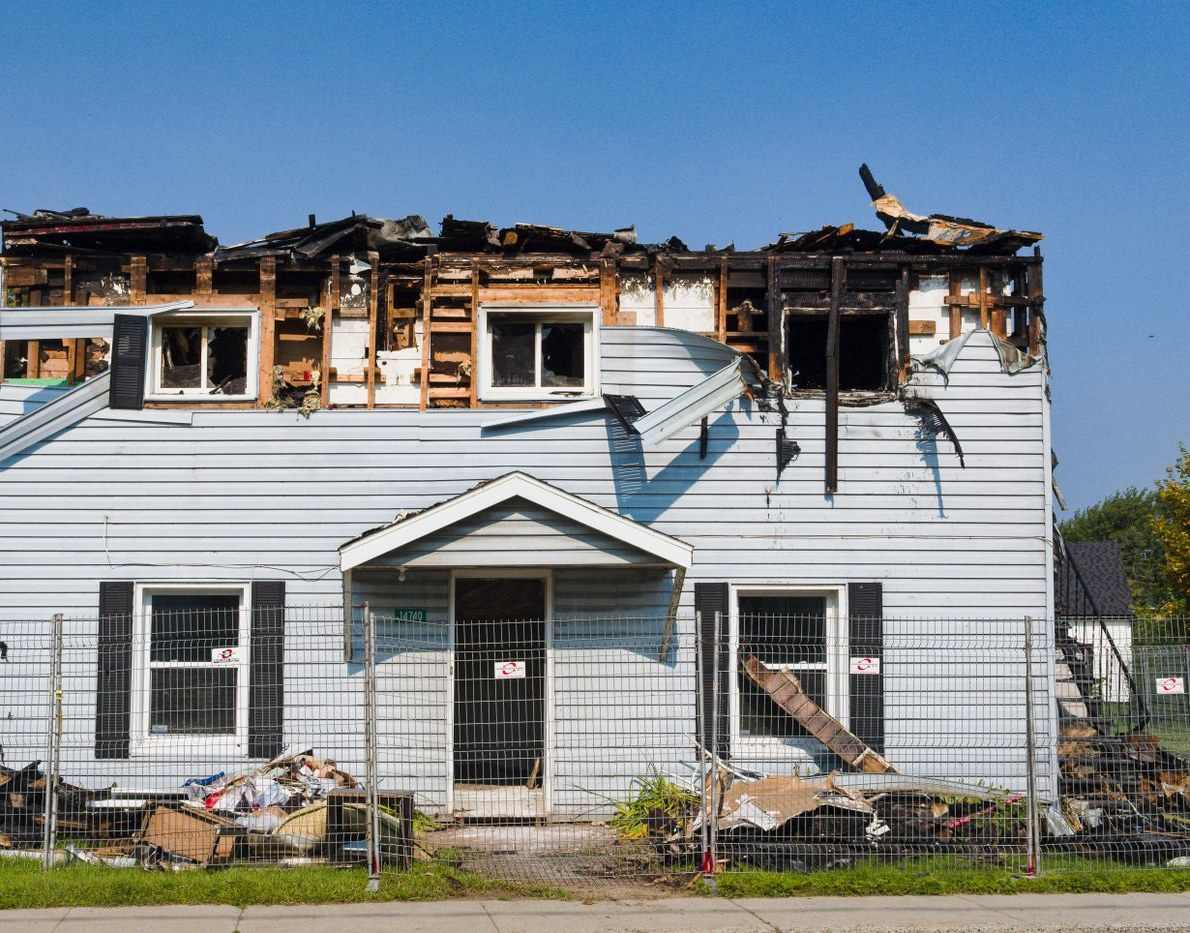
Fire and smoke damage restoration in Columbus, OH
After the fire is out: when it is safe to go back in, how to protect what is left, and how soot and smoke cleanup works.
Has the fire department said you can go back in? Wait for their OK. Until then, stay out, even to grab belongings.
Safety first
Do this now
Once the fire department lets you back in:
Leave the gas, power and water off.
Do not turn them back on yourself. The fire department or your utility will tell you when it is safe.
Why: damaged wiring and gas lines can start a second fire.
Photograph before you clean or throw anything out.
Take photos and video of every room, including smoke stains on walls and ceilings.
Why: your insurer will ask what the damage looked like.
Keep the house closed up.
Close and lock the doors and windows that still work. Broken ones and roof openings let in rain and strangers.
Why: an open house can take on water and lose belongings after the fire.
Protect your lungs.
Soot and ash irritate the lungs. Wear an N95 mask if you go in, and keep children and pets out.
Why: fine soot particles stay in the air and on every surface.
What not to do
- Do not wipe or scrub soot off walls, ceilings or furniture. It smears and sets deeper.
- Do not eat food or use medicine that was near the fire, heat or smoke.
- Do not use appliances or electronics that got wet or hot until they are checked.
- Do not turn on ceiling lights or fans if the ceiling got wet.
Not sure if it is safe to go in, or what to save first? Call and ask.
Call (614) 579-0661Our work
Board-up and securing the house
We cover broken windows and doors with plywood and put tarps over roof openings to help keep out rain and strangers. Board-up is the first step of most fire jobs.
Our work
Soot and smoke cleanup
Soot is tested first, because different fires leave different residues and each needs its own cleaning method. Smoke odor comes from residue in surfaces and air ducts, so cleanup removes the residue instead of covering the smell.
How it works
How a fire and smoke job works
Secure the house
Openings are boarded up and roof holes covered, to help keep weather and strangers out.
Walk through and document
We walk through with you, photograph each room and test the soot.
Agree on the plan
We explain what can be cleaned and what may have to go. Work starts once you approve it.
Dry what the hoses soaked
Firefighting leaves water behind, so wet areas are dried the same way as after a leak.
Clean soot and smoke residue
Surfaces are cleaned room by room, with methods that match the soot.
Treat the odor at its source
Odor left after cleaning is treated where it sits. If a method needs the house empty, everyone stays out until it is done.
Questions about your house after a fire? Call us.
Call (614) 579-0661Costs
Costs and who pays
What affects the cost
The price depends on how much of the house was affected, the kind of soot, and how much has to be cleaned, dried or removed.
A free on-site look and written estimate, Monday to Friday, 7 am to 6 pm.
Outside these hours, call the same number. After-hours visits cost more.
Who pays
Homeowners policies usually cover sudden fire damage, but limits and terms differ. Your insurer decides what your policy covers.
- Your deductible is always yours to pay.
- We document the damage and share it with your adjuster at your direction.
- We are not public adjusters.
Read our insurance claims guide.
Renting?
Tell your landlord or property manager in writing, and photograph your belongings. A renters policy usually covers your belongings, and some also pay for a place to stay.
Questions
Fire and smoke questions
When can I go back in?
Only when the fire department says it is safe. They check for structural damage and hazards first.
Can my belongings be cleaned?
Often, yes. Hard surfaces and many fabrics clean well. Soft, porous items that soaked up heavy smoke or soot may not.
Will the smoke smell go away?
Removing the residue that holds the odor is what makes the smell fade. Air fresheners only cover it for a while.
Why is there so much water?
Firefighting uses a lot of water. It needs drying just like a leak, or mold can follow.
Will my policy pay for this?
Homeowners policies usually cover sudden fire damage, but limits and terms differ. Your insurer decides what is covered.
Do you do the repairs after the cleanup?
No. Rebuilding after a fire is a separate job for a contractor you choose. If you ask, we can share our records with your contractor to show what needs repair.
24/7 Emergency Response